4 August 2026 · 6 min read
What polished concrete costs in Sydney, and what moves the number
Polished concrete pricing confuses people because two different processes get sold under one name. Once you separate them, the numbers make sense.
Two processes, two prices
Grind and seal does what it says: the slab is ground flat, then a protective sealer goes over the top. It is the more affordable route and it suits most homes, garages and alfresco areas.
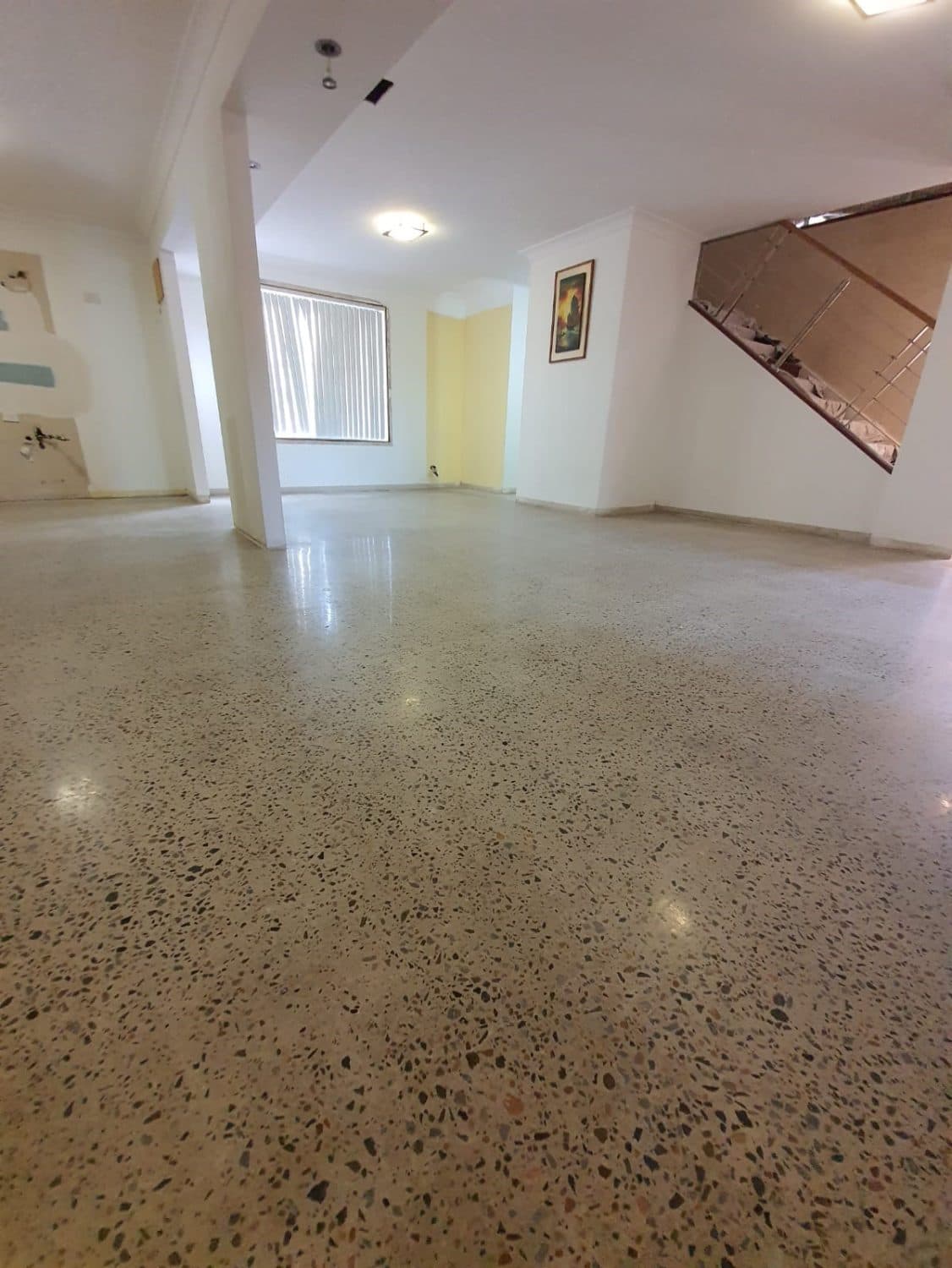
Mechanical polishing keeps refining the concrete itself with progressively finer tooling and a densifier until the slab develops its own sheen, with no coating on top. It costs more, wears longer, and is what people usually mean by a true polished floor.
| Process | Typical market range per m² |
|---|---|
| Grind and seal | $90-$120 |
| Mechanically polished, average | $105-$115 |
| Mechanically polished, premium finishes | $110-$180+ |
Market figures from published Australian cost guides. Every slab is different, which is why we quote after seeing yours.
The two choices that move your price
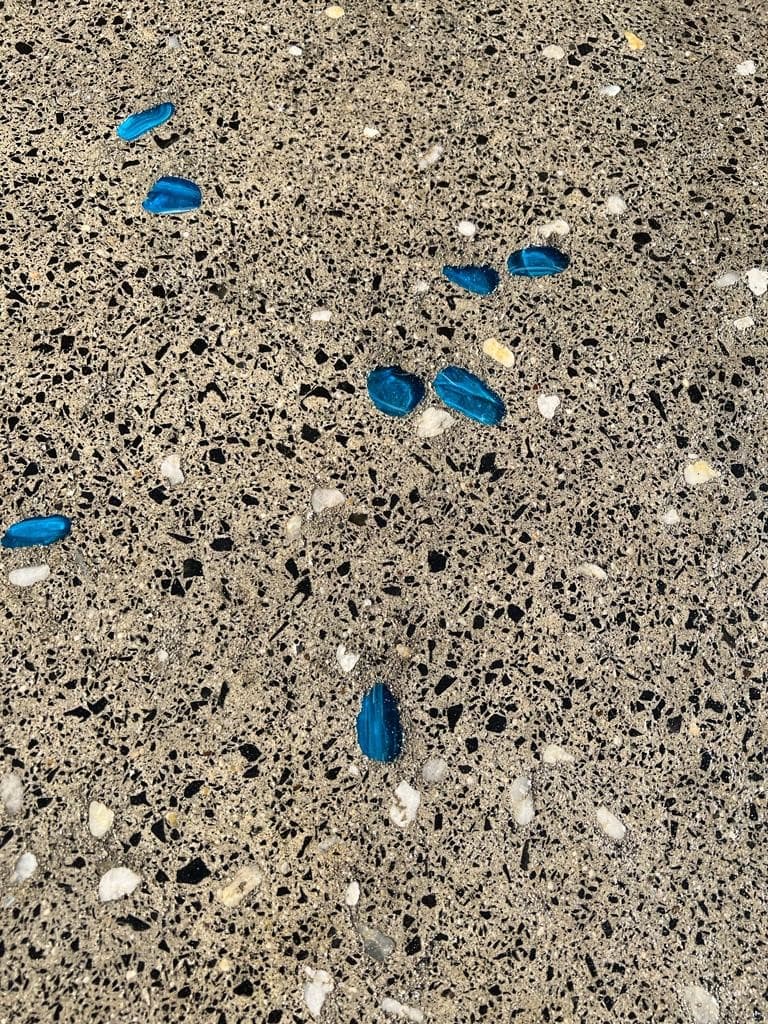
Aggregate exposure is the first. A light grind keeps the surface close to plain concrete. Grinding deeper opens up the stone through the slab, which takes more passes, more tooling and more time. On one Double Bay alfresco job, blue glass had been thrown into the slab before pouring, and a full exposure grind brought it out across the whole floor.
Gloss level is the second. Matte and satin finishes need fewer polishing stages than a high gloss, which is part of why matte has been overtaking gloss in Sydney homes anyway. It costs less and hides footprints better.
What else shows up in a quote
Beyond exposure and gloss, expect these to matter:
- Slab condition. Old glue, coatings, patches and uneven sections all have to be ground out first.
- Edges and detail work. Rooms with lots of corners, stairs or tight edges take longer than open areas.
- Area size. Like every concrete trade, small areas carry the setup cost across fewer metres.
- Crack treatment. Stable cracks can be filled and polished through, but they take time to do properly.
How it stacks against tiles and timber
The purchase price of polished concrete sits in the same territory as good tiles or engineered timber once preparation is counted. The difference shows up over the following twenty years: there are no grout lines to scrub, no boards to swell or re-coat, and no floor covering to rip out and replace, because the floor is the structure of the house itself.
It also pairs naturally with underfloor heating, and it never harbours the dust that carpet does, which is a real consideration for allergy households.
One thing to know before you build or extend
The best polished floors are planned before the slab is poured, because the aggregate in the mix and the quality of the pour set the ceiling on what the finish can be. If you are building or extending and want polished concrete, talk to us before the concreter books the pour. If your slab is already down and covered, we work with what it gives us, and it is usually more than people expect.
The full process is on our polished concrete page.