4 August 2026 · 5 min read
How long concrete resurfacing lasts, and what decides it
The honest answer has a range, because the same product lasts ten years on one driveway and three on the next. The difference is decided before the finish ever goes on.
The honest range
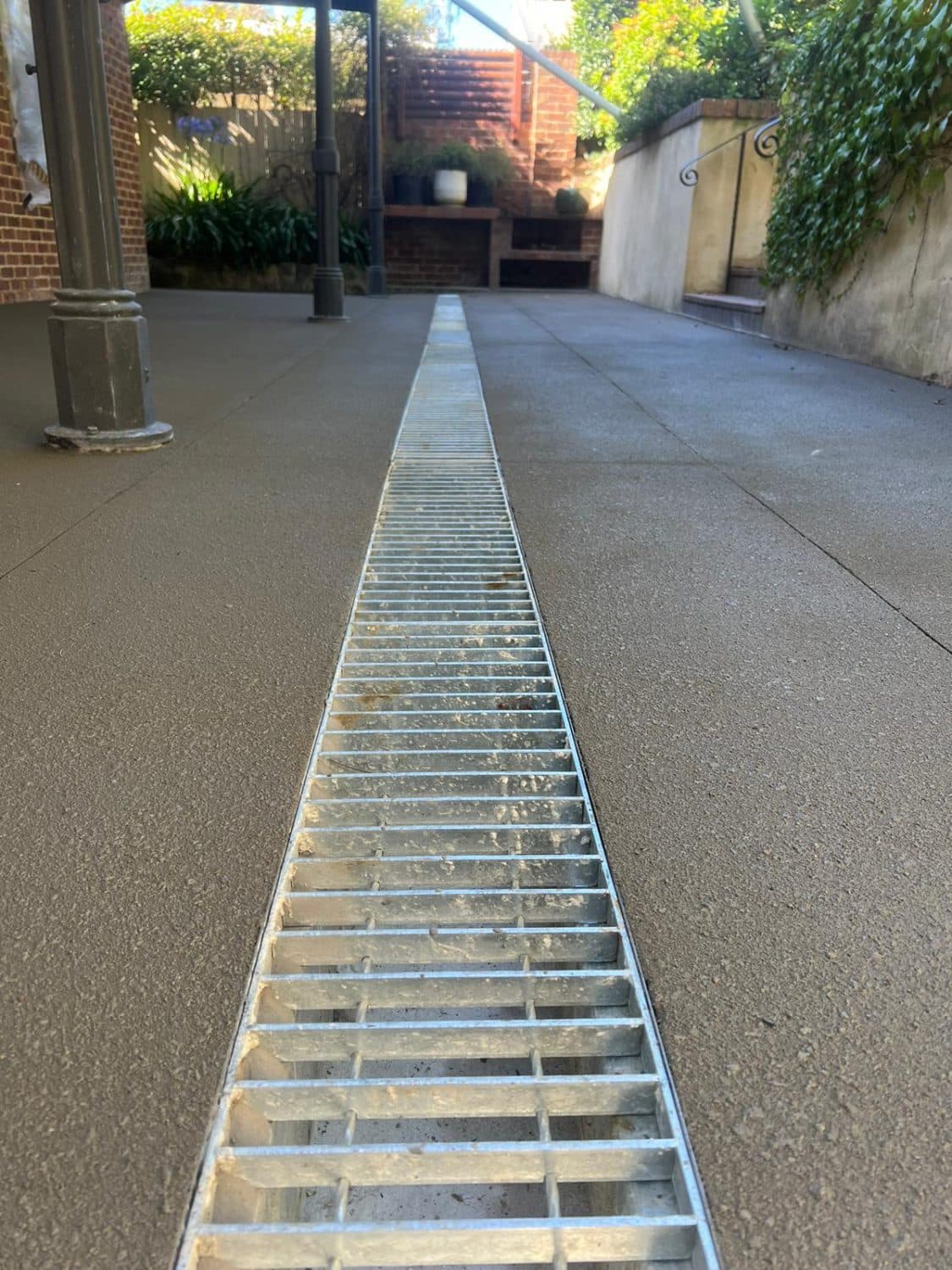
A resurfaced driveway or outdoor area done properly, meaning the slab was mechanically ground, the cracks were repaired, and the surface has been resealed on schedule, routinely gives 10 to 15 years of service, and we see plenty going longer.
The same products applied over a slab that was only pressure washed tell a different story. The bond was never there, so the finish starts lifting or bubbling somewhere between the second and fourth summer, usually starting where tyres turn or water sits.
Preparation sets the ceiling
Resurfacing material is only ever as good as its grip on the concrete underneath. Grinding takes off the weathered, contaminated top layer and leaves an open profile the new surface keys into. Washing, however thorough, leaves the old closed surface in place with the new finish sitting on top of it.
We covered this properly in why we grind concrete instead of pressure washing it. If you only take one thing from this article, make it that question to whoever quotes your job.
The two-year reseal habit
Sydney sun works on outdoor surfaces constantly. UV breaks sealer down, rain and shade grow mould in it, and traffic wears the high spots. The sealer is the sacrificial layer in the system, and it is designed to be renewed.
A wash and reseal roughly every two years costs a small fraction of the original job, brings faded colour back up noticeably, and resets the protection. The resurfaced areas we see still looking sharp after a decade all belong to people who kept that habit.

What failure actually looks like, and what it means
It is worth knowing the difference between wear and failure. Gradual dulling and colour fade in traffic paths is wear, and a reseal fixes it. Lifting, bubbling, flaking or sheets of finish coming away is bond failure, and no amount of resealing fixes a bond that was never made.
That distinction is also why quotes vary so much. The cheaper quote is often cheaper precisely because it skips the step that decides which of those two futures your driveway gets. Our cost guide covers what the market charges and why.
What we will promise, and what we will not
We grind every surface we resurface, we repair cracks and damage as part of preparation, and we stand behind the bond. What we will not do is promise a repaired crack can never move again, because ground movement is not something anyone controls. We say that at the quote, in plain words, because a warranty that pretends otherwise is marketing rather than a promise.