19 April 2024 · Updated 4 August 2026 · 5 min read
Where polished concrete is heading in Sydney homes
Polished concrete has moved well past the industrial look it started with. Here is what people are actually choosing now.
What polished concrete is
Polished concrete is a process, not a product. Existing concrete is ground with progressively finer tools until it reaches the sheen you want. It is not a coating laid on top, it is the slab itself refined.
That is what gives it its durability. There is no layer to wear through, because the floor is the structure.
Aggregate exposure is the biggest decision
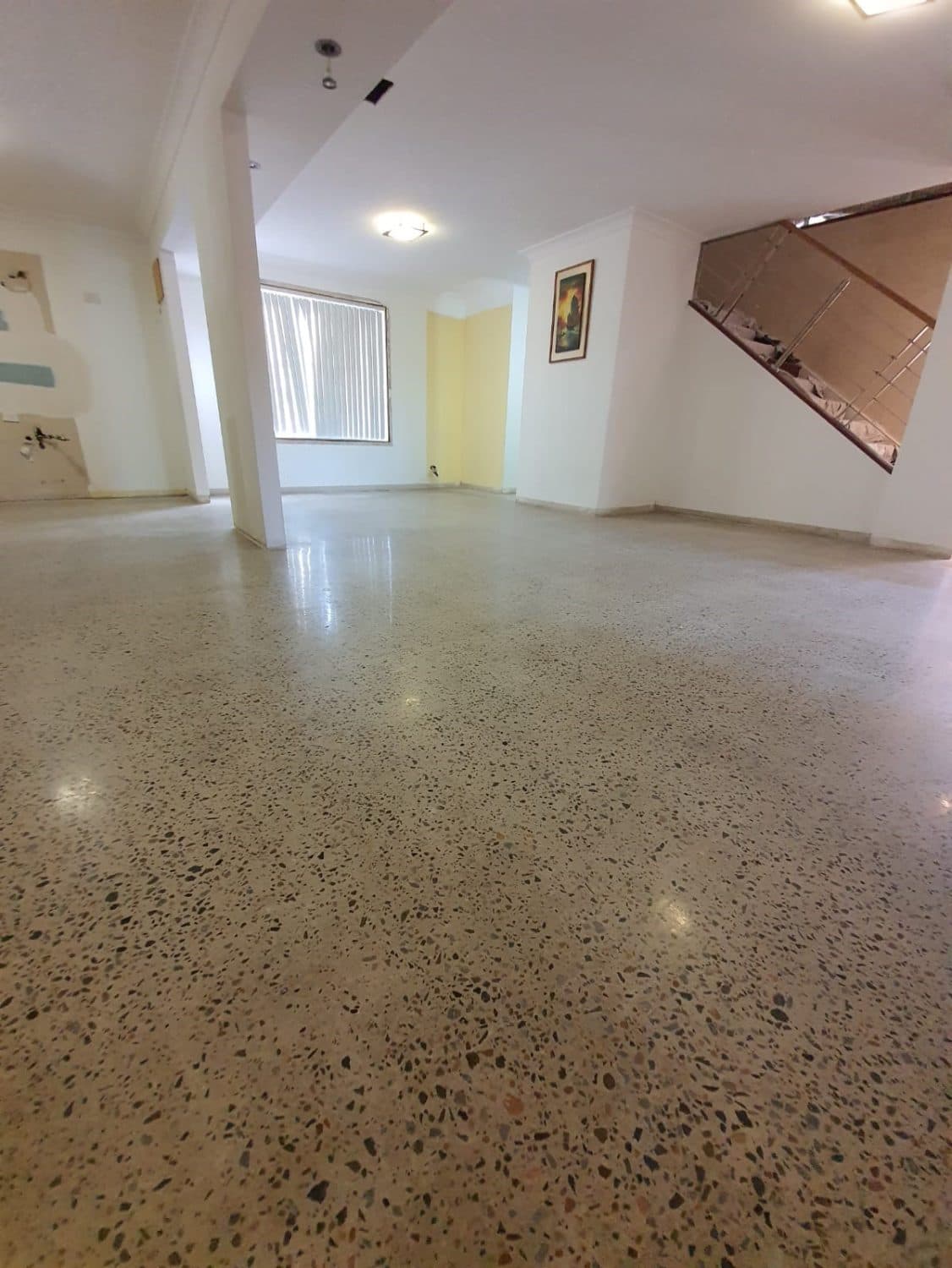
How far we grind down determines how much stone shows. A light cut keeps the surface close to plain. A full cut opens the aggregate right up so the stone and sand read across the whole floor.
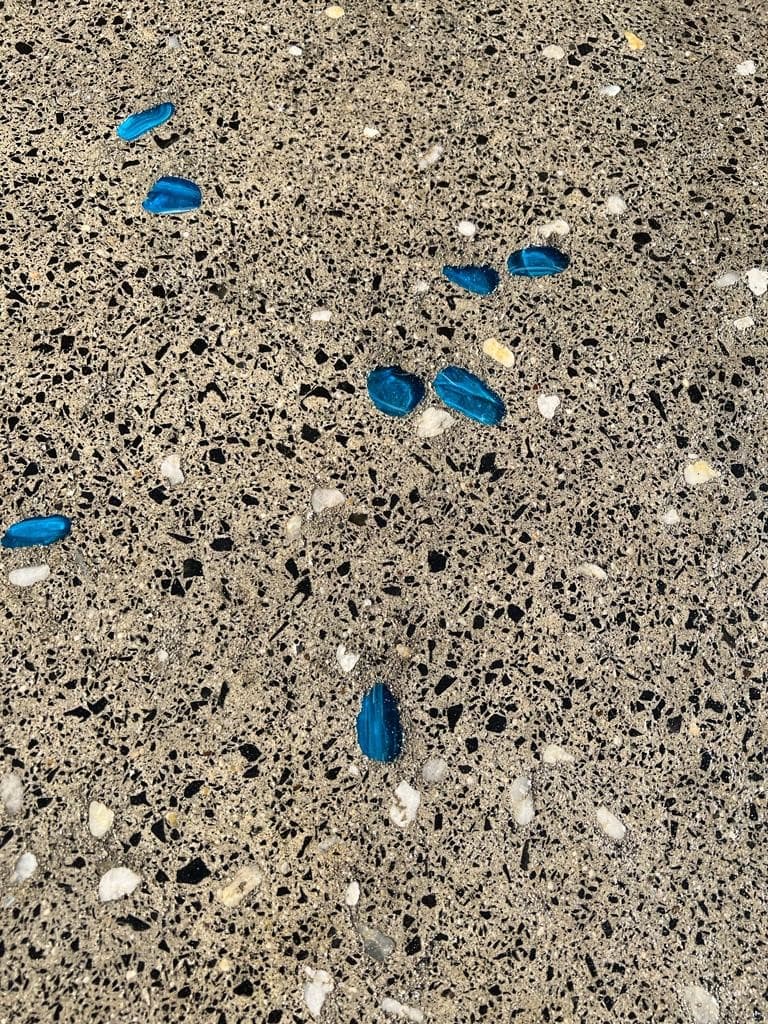
On one alfresco area in Double Bay, blue glass had been thrown into the slab before the pour, and grinding to full exposure brought it out through the floor. That kind of result only happens when the finish is planned before the concrete goes down.

Matte is overtaking high gloss
High gloss dominated for years because it photographs well. In practice, a lot of homeowners find it shows footprints and reflections more than they expected.
Matte and satin finishes have grown steadily as a result. They read as calmer, they hide day-to-day marks better, and they suit the softer interiors people are building now. They also cost less, as our polished concrete cost guide explains.
Colour matching to the room
Rather than treating the floor as a neutral, people increasingly pick a tone that ties to cabinetry, walls or joinery. Concrete takes colour well, and a floor tuned to the kitchen it sits in reads as deliberate rather than industrial.
Why it keeps winning on practicality
Beyond looks, the case is straightforward. It handles heavy traffic, it does not need waxing or re-coating like timber, it pairs naturally with underfloor heating, and it uses a material that is already in the building rather than a new floor covering shipped in on top. The full process is on our polished concrete page.