4 August 2026 · 5 min read
Getting a pool surround that is safe barefoot and stays that way
A pool surround has the hardest life of any concrete at your place. It is permanently wet in summer, coated in sunscreen and chlorine, and walked on exclusively by bare feet. The finish has to be chosen for that, not just for looks.

Why pool surrounds fail before other concrete
Chlorinated or salt water splashes onto the surface every day of summer, then the sun bakes it dry, over and over. Sunscreen and body oils soak into bare concrete and turn slippery. Shaded corners stay damp and grow mould. Any one of those would age a surface; a pool surround gets all of them at once.
So an ordinary driveway-spec finish around a pool is the wrong tool. The surround needs a system specified for permanent wet, bare feet and chemical exposure.
Where slip resistance actually comes from
Two places. The first is texture: finishes can be laid with a fine profile that grips a wet foot rather than letting it skate. The second is the sealer: anti-slip additives are mixed through it so the protective layer itself has bite, instead of drying to glass.
Australian Standard AS 4586 classifies surfaces by wet slip resistance, the P ratings you may have seen on tiles. When we quote a pool surround, the sealing system is specified with wet barefoot areas in mind, and we will talk you out of any finish that looks beautiful and behaves like ice.
The barefoot temperature question
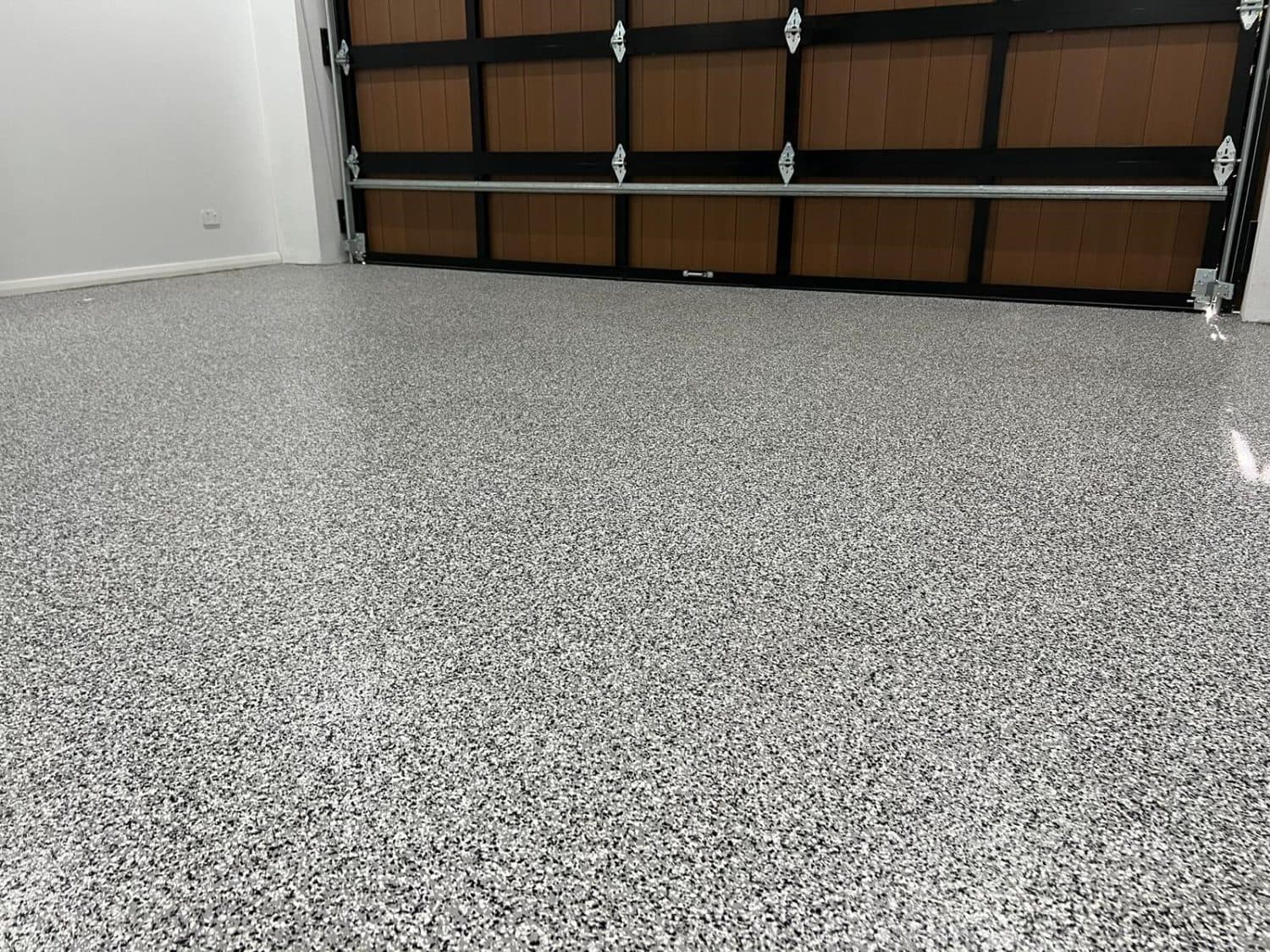
Everyone who has crossed a dark surface in January understands this one. Dark colours absorb heat, and a charcoal pool surround in full sun can be genuinely painful underfoot. Lighter tones reflect more heat and stay walkable through the hottest part of the day.
That does not mean the surround must be white. Mid-tones and flecked finishes split the difference, hiding marks better than pale colours while staying cooler than charcoal. Our advice on choosing colour against the house applies at the pool too, with heat as the extra factor.
Coping, drainage and the details that matter
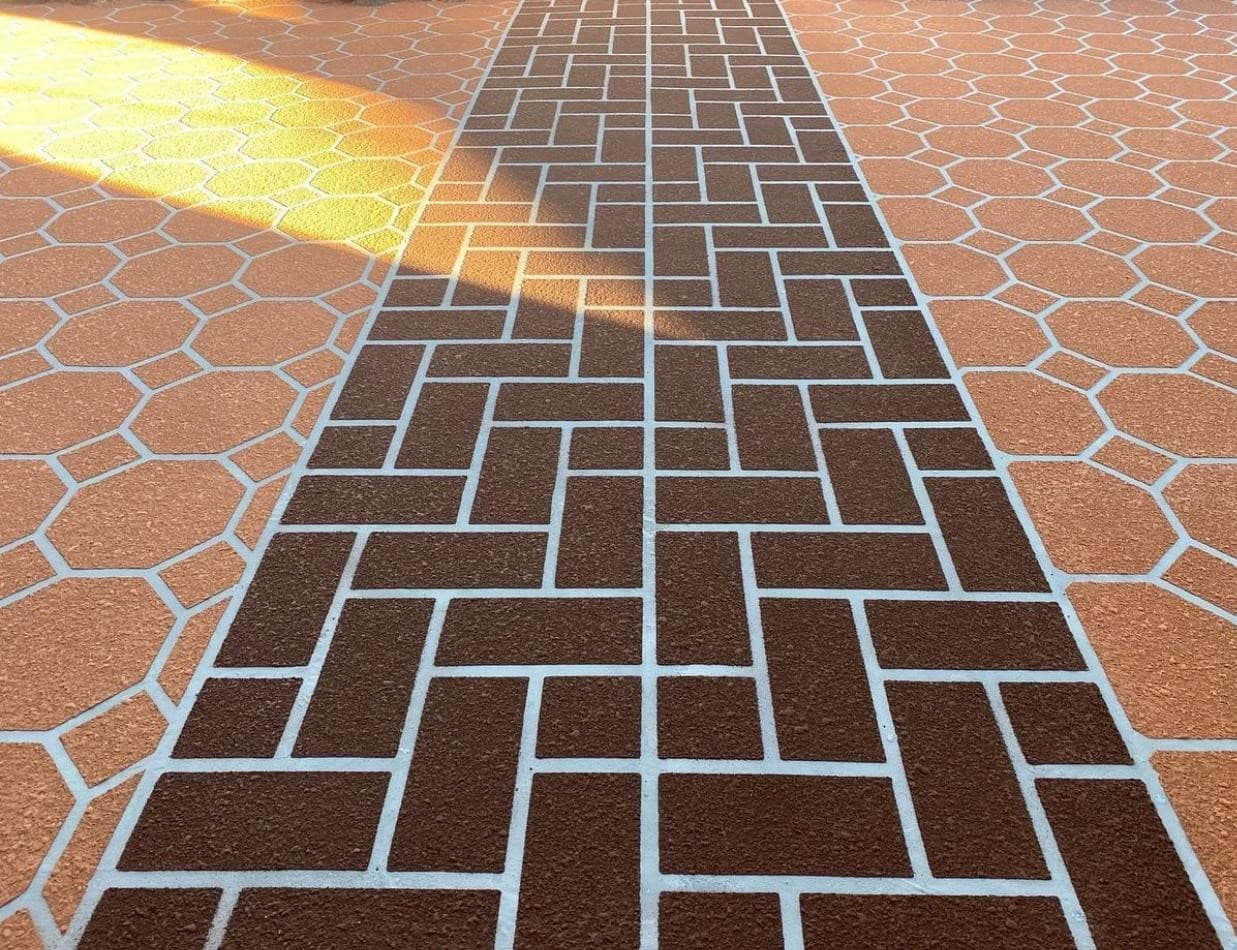
A good pool surround job thinks about where the water goes. Falls need to run splash away from the house and back toward drainage rather than pooling in low spots that stay slick and grow mould. Existing coping can usually be worked with or around, and patterns can be laid to frame the pool rather than fight its shape.
These are exactly the details a site visit exists to catch, which is why we quote in person with sample boards rather than over the phone.
When to book it
Pool work is seasonal, and everyone remembers their surround in November. The comfortable window is late winter and spring: the weather suits curing, the pool is not in daily use, and the job is finished and fully cured before the first swim of the season. Resurfacing typically takes a few days plus curing time, so a spring booking costs you no swimming at all.
See what is possible on our pool surrounds page, or ask us to look at yours before the season starts.