4 August 2026 · 6 min read
Why DIY epoxy kits peel, and when they are still worth it
We make our living installing epoxy floors, so you would expect us to rubbish the kits. We are not going to, because the kits are not the problem. The preparation is, and that is the part the box cannot sell you.

What is actually in the box
A typical hardware kit gives you a water-based or low-solids epoxy, a small bag of decorative flake, an etching solution, and instructions that say clean the floor thoroughly. Applied carefully, it goes on fine and looks good for a while. The reviews that matter are the ones written two summers later.
The etching solution is where the trouble starts. Acid etching opens bare concrete a little, but it does nothing about old sealers, oil contamination or the smooth-trowelled surface most garage slabs have, and it leaves salts behind if it is not rinsed and neutralised properly.
Hot tyre pickup, the classic failure
Drive home on a summer afternoon and park. The tyres are hot from the road, the heat softens the coating under them, and as the tyre cools it contracts and grips. Next morning the car pulls out and takes neat tyre-shaped patches of your new floor with it.
This is a bond failure, and it is overwhelmingly a preparation failure. Thin water-based builds over acid-etched concrete simply do not have the grip to hold against it. Properly ground concrete under a quality system does, which is why hot tyre resistance is a headline feature of professional floors rather than a given.
What a professional job does differently
The visible finish is the smallest part of it:
- The slab is mechanically ground with dust extraction, removing contamination and opening the surface so the resin keys in
- Moisture is checked before anything goes down, because a damp slab lifts any coating from below
- Cracks, spalls and oil-soaked patches are repaired rather than coated over
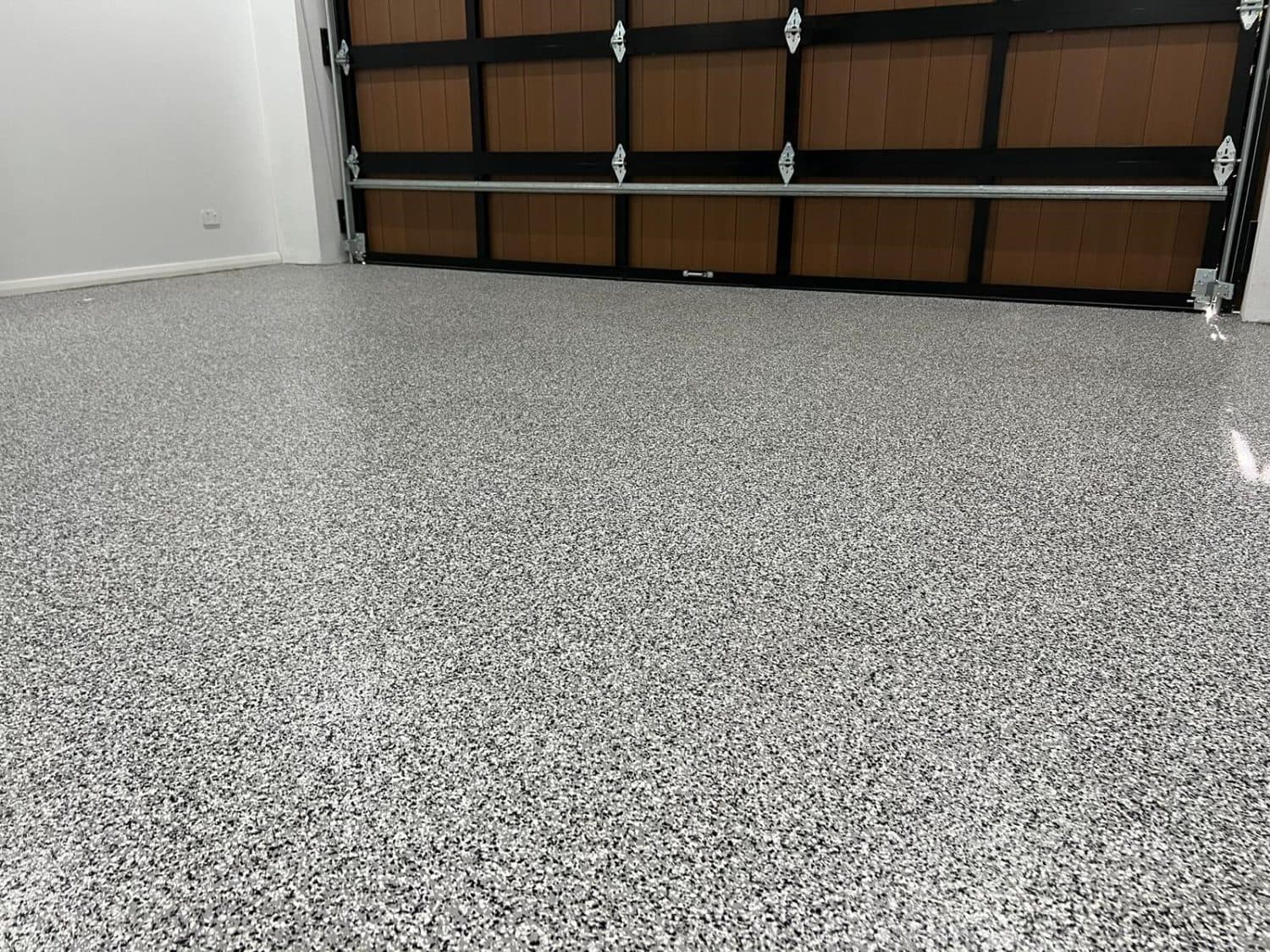
- The system is built in layers: a primer that soaks into the open concrete, a high-solids body coat, flake if chosen, and a wear topcoat
- Edges, steps and corners get finished wall to wall instead of stopping where the roller got awkward
When a kit is honestly fine
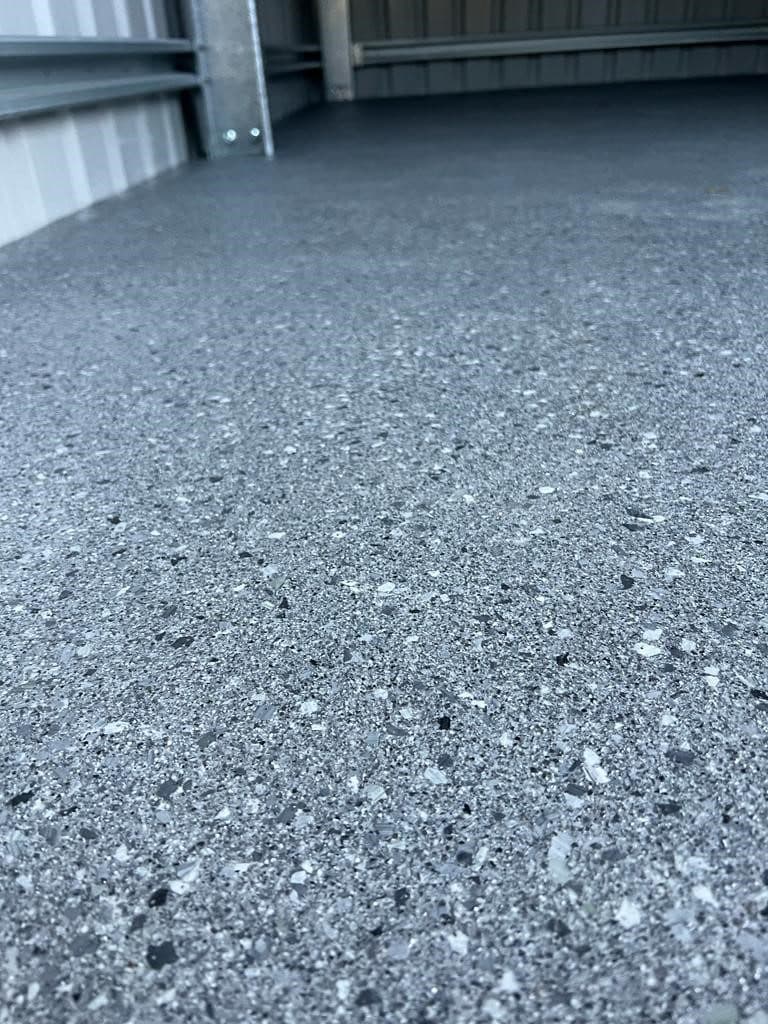
If the floor is a low-traffic shed or storage area that never parks a warm car, the slab is bare unsealed concrete in good condition, and you are prepared to do the surface preparation seriously rather than nominally, a kit can give you a few good years for a few hundred dollars. That is a legitimate trade.
Go in with open eyes: hire a grinder rather than trusting the etch bottle, fix the cracks first, and accept that the coating in the box is thinner than anything a professional would put their name on.
The arithmetic over ten years
A kit costs a few hundred dollars and, on a parked-in garage, commonly needs redoing within a couple of years, with the old failed coating ground off first, which is the worst version of the preparation work. A professional floor at market rates of roughly $1,850 to $2,500 for a single garage is designed to still be down in ten.
If you are weighing it up for your own garage, send us a photo. If a kit genuinely suits your situation, we will say so. It costs us nothing to be straight with you, and it is why people call us back for the jobs that matter.